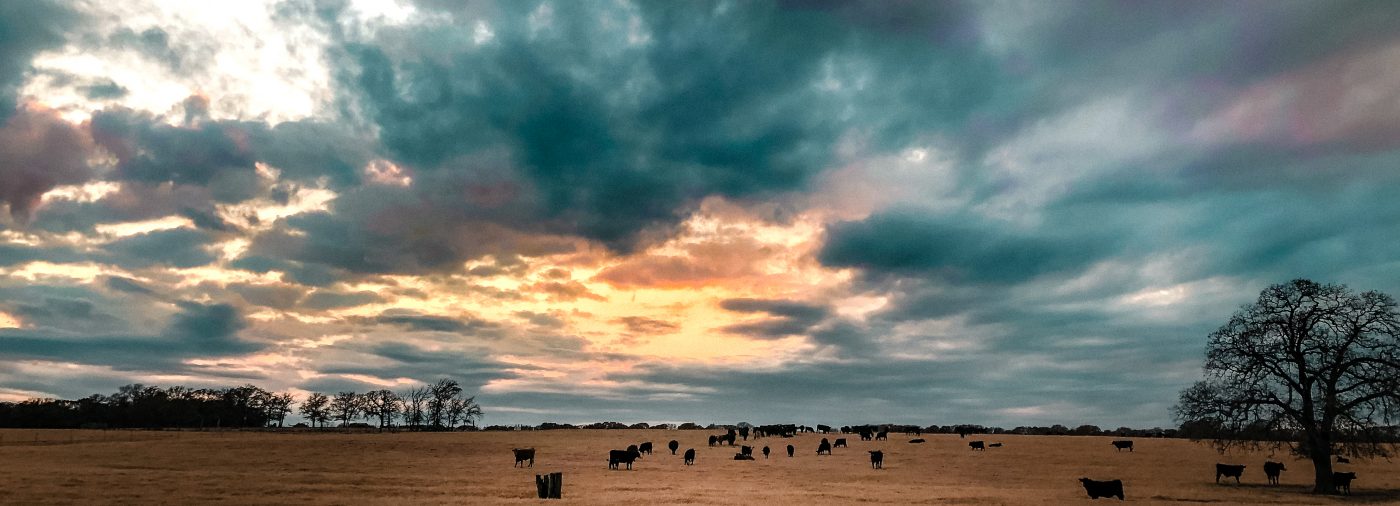


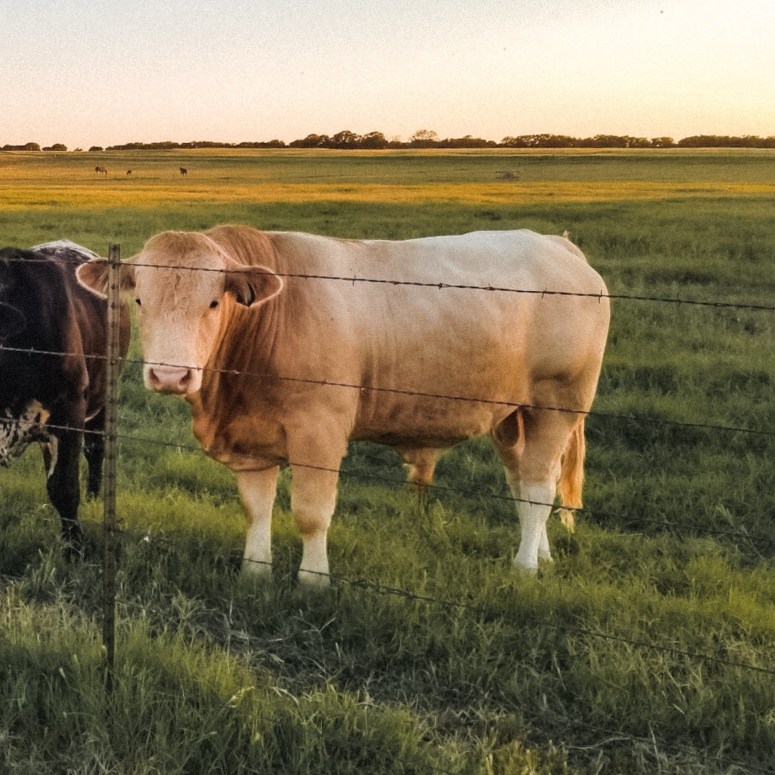
We’ve put years of research into selecting the breeds and individual genetics that make up the herd at Hunter Lewis Land & Cattle. Blonde d’Aquitaine cattle were the first to join the ranch for many reasons and remain the foundation of our beef program. In keeping with our 5-point Herd Standards, we looked for animals that were docile, hardy, and efficient as well as easy calvers that produced high-quality lean beef. Blonde d’Aquitaine cattle fit these characteristics perfectly and we were immediately impressed by the elegance of the breed. Their grace and calm demeanor are essential to our family ranch and with proper care, supervision, and animal husbandry training, even the smallest of cowboys can handle the breed. Our personal experiences through the years have only surpassed these initial impressions and we’re more in love with the breed than ever before.
Breed history
Blonde d’Aquitaine cattle originate from the Aquitaine region of France and are a composite breed combining the Garonnais strain, the Quercy, and the Blonde des Pyrenees. Commonly known as “Blondes”, the breed today is one of the best and most popular beef breeds in France and is quickly gaining popularity throughout the world, as well as producing some of the most sought-after and expensive steaks. The breed’s multi-purpose history as draft animals, beef cattle, and milkers contribute to their docility, muscle development, excellent milk production, and hardiness.
BREED CHARACTERISTICS
quiet temperament
Blondes are typically docile and easy to work. As with any large animal, caution must be taken but the Blondes are always among the easiest of our herd to manage in all phases of life.
easy calving
They are fertile, easy calvers and produce very growthy calves. A number of calf characteristics contribute to easier passage through the birth canal: (1) the calf’s birth weight is spread over a much longer body, (2) a finer bone structure, (3) light muscling at birth, (4) smooth shoulders, and (5) a small triangular head. Cow characteristics, such as width of the pelvis and an inherited hooks-to-pins slope of the rump also contribute to calving ease. Tests have shown up to 98% unassisted calving for fullblooded Blondes and our ranch operates at a 100% unassisted calving rate from our Blonde cows.
rapid growth
Blonde genetics combine to give exceptional growth under many conditions and they consistently show the highest growth rates when compared to other breeds. It is not unusual for Blonde calves to gain 3 pounds per day on milk and good grass. Muscle growth requires much less energy (feed) input pounds/pound than does bone or fat so the Blonde’s natural characteristics such as a finer bone structure and minimum external fat, along with well developed muscles and basic hardiness, are ideal for feed efficiency and rapid growth. Blondes average 80lbs at birth and yearling heifers typically weigh around 1000lbs. Mature fullblood Blonde bulls typically weigh 1600-2600 pounds and mature fullblood cows normally weigh 1400-1800 pounds.
Heat Tolerance & hardiness
Blondes may well be the most adaptable breed in existence. They flourish in all climates in the USA as well as in Canada, Europe, Australia, and the Tropics. Blondes are extremely adaptable and are hardy foragers. In addition to the breed’s basic hardiness, its light color, short hair, active sweat glands and localized muscle control over skin movement (similar to Brahman cattle and horses) give Blondes an added advantage in harsher environments.
efficiency
Blondes are unsurpassed in feed efficiency. Blondes are hardy foragers and readily convert low grade forage to efficient gains. In feed lot tests they consistently convert feed at the rate of 5.3-6.5 pounds of feed per pound of gain as compared to 7.5-8.5 pounds feed/pounds gain for other breeds.
beef quality
Efficient production of lean red meat is the primary advantage of Blonde d’Aquitaine cattle. Feedlot and carcass tests consistently show superior feed efficiency and a low fat to lean ratio for Blondes and Blonde crosses. Blonde meat marbles well, is tender and juicy, but does not carry excess external fat. It is unusual for a Blonde to have more than 0.2-0.3 inch of external fat. The breed’s remarkable length and highly developed hind quarter and loin produce a higher percentage of the more valuable steak and roast cuts.
Hunter Lewis Land & Cattle Co. maintains a purebred, registered blonde d’aquitaine herd as well as using the breed’s outstanding genetics in our market beef cross-breeding program.
For more information on the breed or our genetics and animals, please email hunterlewisbeef@gmail.com.


